The logistics industry continues to evolve with rising customer expectations, real-time shipment tracking demands, and complex transport operations. Modern transport and logistics businesses increasingly require digital systems that bring together customer management, load monitoring, fleet coordination, and shipment visibility under a single platform.
This shift has given rise to advanced Logistics CRM solutions, powerful transport management system software, and intelligent freight management software created to optimize workflows, reduce operational gaps, and support data-driven decisions. Among these modern innovations, Load Tracker CRM by DevDiligent stands out as a future-ready tool that supports transport companies, freight forwarders, courier businesses, and logistics operators seeking integrated operational control.
Why Logistics Companies Are Adopting CRM Solutions
A Logistics CRM extends far beyond simple customer record management by supporting logistics and transport companies in managing the entire lifecycle of their operations. This includes handling leads and client onboarding, shipment booking, freight documentation, delivery coordination, real-time communication, and post-delivery insights.
Due to these comprehensive capabilities, many growing logistics companies are shifting from scattered spreadsheets and outdated manual workflows to dedicated CRM systems for greater efficiency and control.
What Is CRM Software in Logistics?
A CRM in logistics serves as a centralized platform that integrates customer data, operational workflows, shipment records, support tickets, and freight documentation, thereby enabling transport businesses to streamline communication, reduce delays, and improve coordination across teams.
Modern logistics CRM software facilitates faster shipment creation, accurate freight rate management, efficient transport planning, unified customer communication, real-time dashboard insights, and performance tracking for loads, drivers, and vehicles. Moreover, this digital transformation has become essential for small logistics companies and large-scale freight networks alike.
What Is a Logistics & Transportation CRM?
A transport and logistics CRM is designed specifically for companies handling goods movement, cargo operations, last-mile delivery, and freight forwarding. It empowers organizations by structuring data in a unified system and sharing actionable insights that support decision-making across departments like operations, sales, dispatch, compliance, and customer service. The result is improved efficiency, greater delivery accuracy, and reduced operational costs throughout the logistics chain.
Why “Load Tracker CRM” Is Becoming the Preferred Choice for Logistics & Freight Companies
DevDiligent has developed Load Tracker CRM, a smart transport management system tailored for logistics companies seeking an integrated solution that combines CRM, TMS, and shipment monitoring in one powerful platform. This system connects essential logistics operations, including load creation and assignment, real-time shipment tracking, freight rate management, transport scheduling, driver management, vehicle and fleet tracking, route optimization tools, customer relationship management, document management, and dispatch coordination. Load Tracker CRM provides an advanced logistics shipment tracking system, allowing transport companies to monitor delivery status with real-time updates.
Explore Load Tracker CRM Features in Detail Here →
A complete breakdown of modules, shipment tracking tools, dispatch workflows, and logistics automation features is available here: Load Tracker CRM – Smart Transport Management System
Feature Highlights of Load Tracker CRM
1. Real-Time Shipment Tracking System
Live maps show current vehicle positions, route updates track deviations instantly, and status transitions log every milestone for complete visibility.
2. Load Assignment & Dispatch Automation
Moreover, matches loads to available drivers automatically, considers workload skills and scheduling conflicts, and sends instant notifications to dispatch teams.
3. Integrated Transport Management System
Central hub for all routes and shipments, manages freight processes from booking to delivery, and provides analytics for operational optimization.
4. Unified Logistics CRM Module
Tracks clients leads and communication history, automates service workflows and follow-ups, and integrates with shipment data for full visibility.
5. Freight Documentation Management
Stores invoices PODs and customs paperwork, enables digital signatures and e-sharing, and automates compliance checks and filing.
6. Role-Based Access & Multi-Branch Operations
Furthermore, granular permissions for dispatch drivers and managers, multi-region support with branch-specific dashboards, and centralized reporting across all locations.
Logistics CRM vs Traditional Spreadsheet Workflows -Comparison Table
| Feature | Traditional Methods (Excel/Manual) | Load Tracker Logistics CRM |
|---|---|---|
| Shipment Tracking | No real-time updates | Full real-time tracking system |
| Load Assignment | Manual, time-consuming | Automated assignment engine |
| Documentation | Hard to manage, scattered | Centralized document storage |
| Communication | Mostly phone calls | CRM-integrated communication |
| Operational Visibility | Limited | Advanced analytics & dashboards |
| Fleet Monitoring | Manual logs | Live vehicle & driver tracking |
| Scalability | Difficult | Designed for multi-branch growth |
The Rising Demand for Transport Management System Software
The logistics sector increasingly relies on Transport Management System (TMS) software to manage complex supply chain operations, including route planning, order management, freight billing, carrier selection, and shipment documentation. Integrating CRM and TMS creates more intelligent, streamlined workflows for transport businesses. Load Tracker CRM bridges this gap with a hybrid model that enhances end-to-end logistics operations.
Freight Forwarders Are Searching for Smarter Freight Management Software
Freight forwarding involves diverse tasks like cargo booking, freight rating, cross-border documentation, customs clearance, shipment consolidation, and carrier negotiation. Modern freight management software simplifies these complex workflows through automation features such as real-time tracking, AI-powered rate negotiations, automated document generation for HBLs and AWBs, and seamless integrations with carrier systems.
Why freight forwarders prefer Load Tracker CRM:
Freight forwarders prefer Load Tracker CRM because it supports small freight businesses, works effectively for mid-sized logistics companies, helps manage both international and domestic freight, enables organized documentation, and supports multi-branch operations. This versatility makes Load Tracker CRM an ideal freight management software for small businesses and large-scale logistics networks.
Real-Time Shipment Tracking System: An Essential Feature in Modern Logistics
Shipment tracking has become a core requirement in logistics, where real-time systems help companies reduce delays, increase transparency, improve fleet reliability, manage customer expectations, and predict delivery outcomes. Furthermore, Load Tracker CRM includes advanced shipment tracking system software that updates every stage of the delivery journey, ensuring complete visibility over loads, routes, and transportation schedules.
Advanced Features That Set Load Tracker CRM Apart
Below are some of the strongest features for logistics, transport, and freight companies:
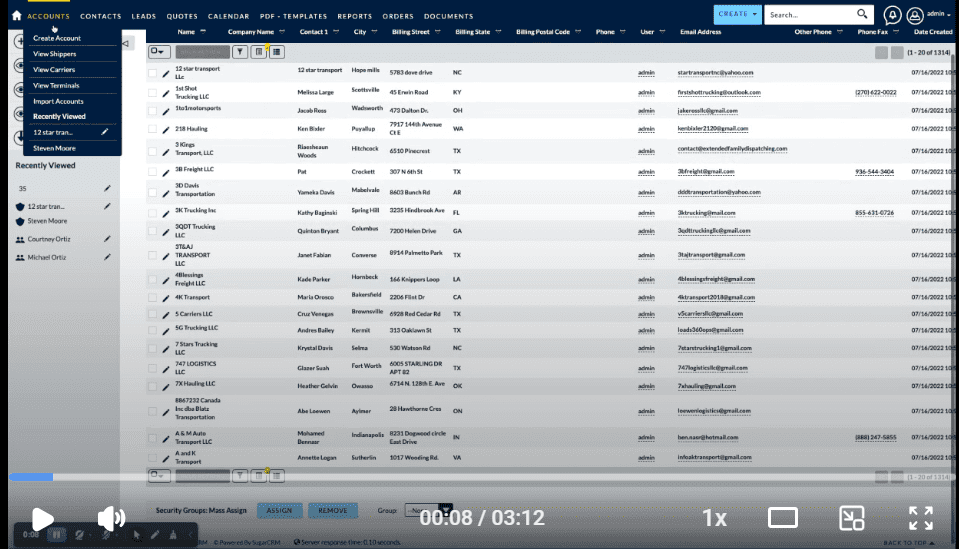
1. Logistics CRM Integration
Logistics CRM Integration combines customer management with transport workflows, enabling seamless handling of leads, client communications, and shipment operations within a single platform.
2. Smart Load Assignment & Dispatch
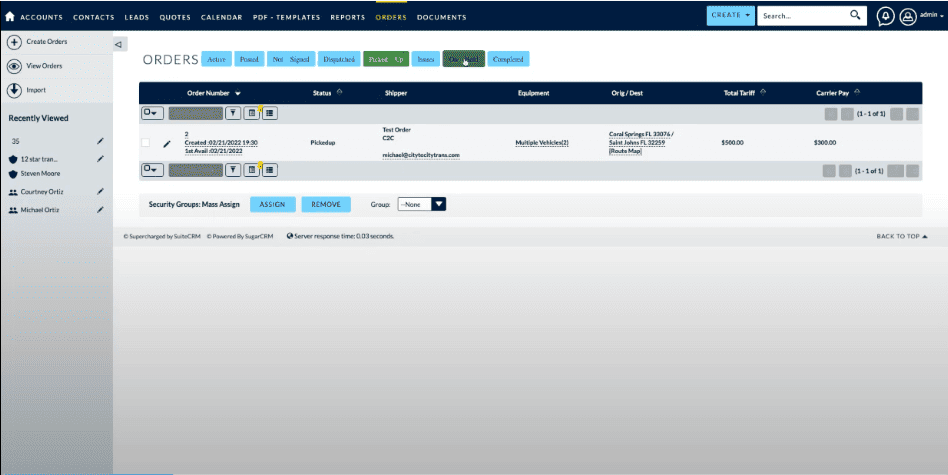
Smart Load Assignment & Dispatch automatically assigns loads to the right drivers or vehicles based on availability, skills, workload, and scheduling, streamlining dispatch operations and reducing manual coordination.
3. Real-Time Shipment Tracking
Real-Time Shipment Tracking offers accurate tracking for shipments and ongoing deliveries through live maps, route updates, status transitions, and delivery logs for complete visibility.
4. Transport & Logistics CRM Dashboard
Transport & Logistics CRM Dashboard displays high-level insights related to freight operations, revenue trends, and delivery performance, providing executives with real-time analytics for informed decision-making.
5. Freight Documentation Management
Freight Documentation Management organizes bills, receipts, PODs, and cross-border documentation in a centralized system, enabling digital signatures, automated compliance checks, and instant sharing across teams.
6. Multi-branch Logistics Support
Furthermore, Multi-branch Logistics Support is designed for networks with multiple operational hubs, offering branch-specific dashboards, role-based access controls, and centralized reporting to streamline coordination across regions.
7. Fleet Performance Tracking
Additionally, fleet performance tracking monitors vehicle health, performance metrics, and route efficiency through real-time data on fuel usage, maintenance schedules, driver behavior, and GPS analytics.
How Load Tracker CRM Helps Logistics Companies Grow
Logistics businesses use Load Tracker CRM to increase delivery accuracy, improve operational speed, automate routine tasks, reduce communication gaps, lower manual workload, monitor fleet efficiency, and make data-driven decisions. Consequently, this comprehensive approach positions it as one of the most reliable logistics CRM software options available for the transport industry.
Future of Logistics CRM & Freight Management Software
Future trends in logistics CRM include AI-driven route planning, predictive load allocation, real-time IoT tracking, automated compliance updates, digital freight marketplaces, blockchain-based shipment verification, and full mobile-first transport management. Moreover, Load Tracker CRM is already adapting to these trends through AI-assisted workflows, real-time visibility, and continuous updates that help logistics companies stay ahead of the curve.
Final Thoughts
The logistics and freight forwarding industry is entering a new era driven by automation, real-time visibility, and unified digital operations. As global transport networks grow more complex, the need for a centralized platform that manages shipments, loads, customer relationships, documentation, and fleet activity is stronger than ever.
A powerful logistics CRM combined with a transport management system creates a streamlined ecosystem where data flows seamlessly, processes stay organized, and decision-making becomes smarter. Moreover, Load Tracker CRM by DevDiligent embodies this transformation by offering a complete solution tailored to modern logistics demands—covering shipment tracking, load management, dispatch workflows, freight documentation, fleet oversight, and operational analytics.
Moreover, with scalable modules and future-ready capabilities, Load Tracker CRM stands as a strong technology foundation for logistics carriers, freight forwarders, and transport companies aiming to improve efficiency and stay competitive in a rapidly evolving industry.