A Hospital Facility Dashboard Manager is a specialized tool within a CRM for hospital management that tracks every patient interaction, from the first ring to the final consultation. It helps administrators reduce patient wait times, capture missed revenue from abandoned calls, and balance staff workloads using real-time data rather than guesswork.
Critical Challenges in Modern Hospital Management:
Managing a large medical facility often involves handling hundred of patient inquiries daily. Without a centralized system, critical issues go unnoticed:
-
- 1. Lost Patient Opportunities: When a call goes missed, that patient often calls the next clinic on the list. Without tracking, you never know how much potential revenue is slipping through the cracks.
-
- 2. The “Waiting Room” Burnout: Patients today expect immediate responses. If your average waiting time is too high, patient satisfaction drops, but without a dashboard, administrators can’t see the bottleneck until it’s too late.
-
- 3. Staffing Imbalance: It is difficult to know if you have enough receptionists or patient coordinators if you don’t have a clear view of peak call hours and average talk times.
Solution We Provides For Hospital: A Data-Driven Command Center
The Hospital Facility Dashboard Manager solves these issues by acting as a live monitor for your entire facility. Instead of looking at old spreadsheets, you get a real-time pulse of your operations.
1. Real-Time Call Intelligence
The dashboard breaks down every call into clear categories: Inbound, Outbound, Total, and Missed. This allows managers to see exactly how busy the facility is at any given second. If missed calls spike, you can divert more staff to the phones immediately.
2. Trend Analysis (Ups & Downs)
Our system automatically calculates percentage changes in call volume. For example, if you see a 15% increase in inbound calls compared to yesterday, the dashboard highlights this trend so you can prepare for a busier afternoon.
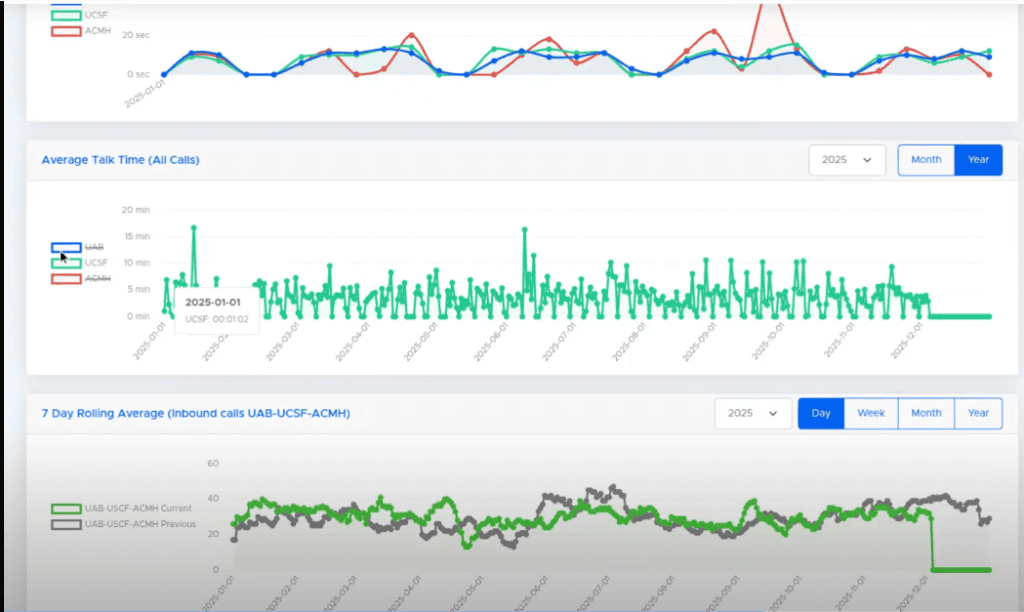
3. Waiting and Talk Time Metrics
This is the most critical feature for improving the patient experience. The dashboard provides clear charts showing:
-
- 1. Average Waiting Time: How long a patient waits before a human answers.
-
- 2. Average Talk Time: How long the staff spends addressing each inquiry. By balancing these two metrics, you ensure patients are handled efficiently without being rushed.
Key Features: Hospital Facility Dashboard Manager
1. Real-Time Call Traffic Command Center
Unlike traditional systems that show data from yesterday, this dashboard provides a live pulse of the facility.
-
- 1. Total Call Breakdown: Instant visibility into Inbound (new inquiries), Outbound (follow-ups), and Total volume.
-
- 2. Missed Call Alerts: A dedicated counter for missed calls, allowing staff to perform “Revenue Recovery” by calling patients back immediately.

2. Automated Trend Analytics (Ups & Downs)
This feature removes the need for manual calculations. The system compares current data against previous periods (daily or weekly).
-
- 1. Percentage Indicators: See at a glance if your call volume is Up 15% or if missed calls have dropped.
-
- 2. Anomaly Detection: Quickly identify unusual spikes in call traffic that might indicate a technical issue or an urgent health event in the community.
3. Patient Wait-Time Monitoring
In the 2026 healthcare landscape, “Time to Answer” is a primary KPI.
-
- 1. Average Waiting Time: Tracks exactly how long a patient stays on hold.
-
- 2. Bottleneck Identification: Helps managers see when the “Wait Time” exceeds the facility’s target (e.g., 60 seconds), signaling the need for more front-desk support.
4. Talk-Time Efficiency Reports
This feature balances speed with quality of care.
-
- 1. Average Talk Time: Measures how long staff members spend on the phone.
-
- 2. Quality Control: If talk times are too short, patients may feel rushed; if they are too long, it creates a backlog. This feature helps find the “Goldilocks” zone for patient consultations.
5. Multi-Facility Comparison (General Report)
For hospital groups or multi-wing clinics, this feature provides a high-level overview.
-
- 1. Inter-Facility Benchmarking: Compare the performance of “Hospital A” vs. “Hospital B” to see which location is handling patient inquiries more efficiently.
-
- 2. Consolidated General View: A single screen that aggregates data from all departments into one master report.
6. Direct Telephony Integration (PBX/VoIP)
The dashboard isn’t just a skin; it’s deeply integrated with the facility’s communication infrastructure.
-
- 1. Seamless Sync: Works with modern VoIP and SIP systems to pull data directly from the phone lines with zero manual entry.
-
- 2. Caller ID Association: Links incoming calls to existing patient records in the CRM for hospital management system instantly.
Why DevDiligent is Different From Others:
While many platforms offer generic tracking, the DevDiligent Hospital Facility Dashboard Manager is purpose-built for the high-stakes environment of 2026 healthcare. Here is how we stand apart:
-
- 1. Human-Centric Data: Most systems show you numbers; we show you the patient experience. By correlating Average Waiting Time with Missed Call rates, we help you identify exactly where patients are losing touch with your care team.
-
- 2. Zero-Latency Reporting: You shouldn’t have to wait for a weekly report to make a change. Our dashboard updates in real-time, allowing administrators to pivot staffing levels during a sudden influx of calls, not hours later.
-
- 3. Intelligent Trend Logic: We’ve integrated “Ups and Downs” percentage tracking directly into the interface. This means you don’t have to do the math—the system automatically highlights performance dips or spikes compared to previous periods.
-
- 4. Operational Transparency: We bridge the gap between clinical excellence and administrative efficiency. Our system ensures that the Best CRM for hospital management serves the front-desk staff as effectively as it serves the hospital board.
-
- 5. Bespoke Scalability: Unlike “one-size-fits-all” software, DevDiligent specializes in custom builds. Whether you are a single specialty clinic or a multi-city hospital network, the dashboard is tailored to your specific facility workflows.
Ready to Automate Your Hospital Operations?
Get a Free Hospital CRM Strategy PlanHow This Benefits Your Medical Facility:
Using the Best CRM for hospital management system isn’t just about technology; it’s about better care.
-
- 1. Improved Patient Retention: By monitoring missed calls, your team can proactively call back patients who didn’t get through, showing a higher level of care and professionalism.
-
- 2. Optimized Costs: Use call volume trends to schedule staff only when they are actually needed, reducing unnecessary overtime costs.
-
- 3. Better Decision Making: Use the dashboard reports during board meetings to demonstrate exactly where the facility is succeeding and where it needs more investment.
Wrap Up:
The Hospital Facility Dashboard Manager addresses the critical issue of “operational blindness” where hospitals lose patients due to unmonitored missed calls and long wait times. By serving as a real-time command center, it replaces guesswork with data, tracking every Inbound, Outbound, and Missed call as it happens.
The core of the discussion focuses on how DevDiligent’s CRM for Healthcare uses live “ups and downs” percentage graph trends to help managers optimize staffing on the fly. By balancing Average Waiting Time with Average Talk Time, facilities can ensure a seamless patient experience while capturing every revenue opportunity. Ultimately, this dashboard transforms a hospital’s communication hub into a transparent, high-efficiency system that prioritizes patient care and operational growth.