Introduction: What is Odoo?
Odoo, also known as Odoo ERP, is a leading modular ERP business software designed to meet the diverse needs of businesses of all sizes. It provides a complete suite of applications, ranging from accounting, CRM, inventory management, manufacturing, eCommerce, project management, and human resources.
Businesses use Odoo software to seamlessly integrate various business processes into a single platform. As a result, they improve efficiency, minimize errors, and, consequently, gain real-time insights into operations. Whether you’re a small startup, an SME, or a large manufacturing company, Odoo offers scalability and flexibility through its modular architecture.
Short answer: Odoo ERP is a modular, open-source business suite that brings together accounting, CRM, inventory, manufacturing, HR, eCommerce, and project management in a unified platform. Its flexibility and customization make it ideal for businesses of all sizes.
Evaluating Odoo ERP for your business?
Get Free Odoo ERP Strategy PlanLatest Odoo News & Updates for 2026
1. Odoo Experience 2026 Announced
Odoo has officially confirmed that Odoo Experience 2026 will return as a three-day flagship event from September 24–26, 2026 at the Brussels Expo in Belgium. This global conference brings together thousands of users, partners, developers, and business leaders to discuss new features, best practices, and enterprise strategies across ERP, CRM, e-commerce, and automation — and is expected to showcase the upcoming Odoo 20 release.
What this means for 2026:
- 1. A major annual Odoo gathering where the company reveals roadmap direction, product innovations, and community ecosystem trends.
- 2. Opportunity for early insights into Odoo 20 and future platform capabilities.
2. Strategic Partnership: Odoo & QFPay HK (Retail & F&B POS)
In December 2025, Odoo announced a strategic partnership with QFPay HK, aimed at enabling offline retail and F&B businesses in Hong Kong to integrate point-of-sale operations with backend ERP workflows seamlessly. This is significant ahead of 2026, as the integration supports broader adoption of Odoo’s POS & payment capabilities in APAC, with merchant onboarding available immediately and event-related promotions planned for January 29, 2026.
3. Odoo Indonesia 2026 Event Lineup
Odoo Indonesia released its event schedule for 2026, including the return of Odoo Days Indonesia with expanded sessions and breakout tracks. These events are designed to boost localized engagement with customers, partners, and developers throughout Indonesia.
Odoo ERP Overview
Odoo is a comprehensive ERP business software designed for companies looking for an all-in-one solution. Unlike traditional ERP systems, Odoo is open-source, modular, and highly customizable. Each module can function independently, allowing businesses to start small and expand as their needs grow.
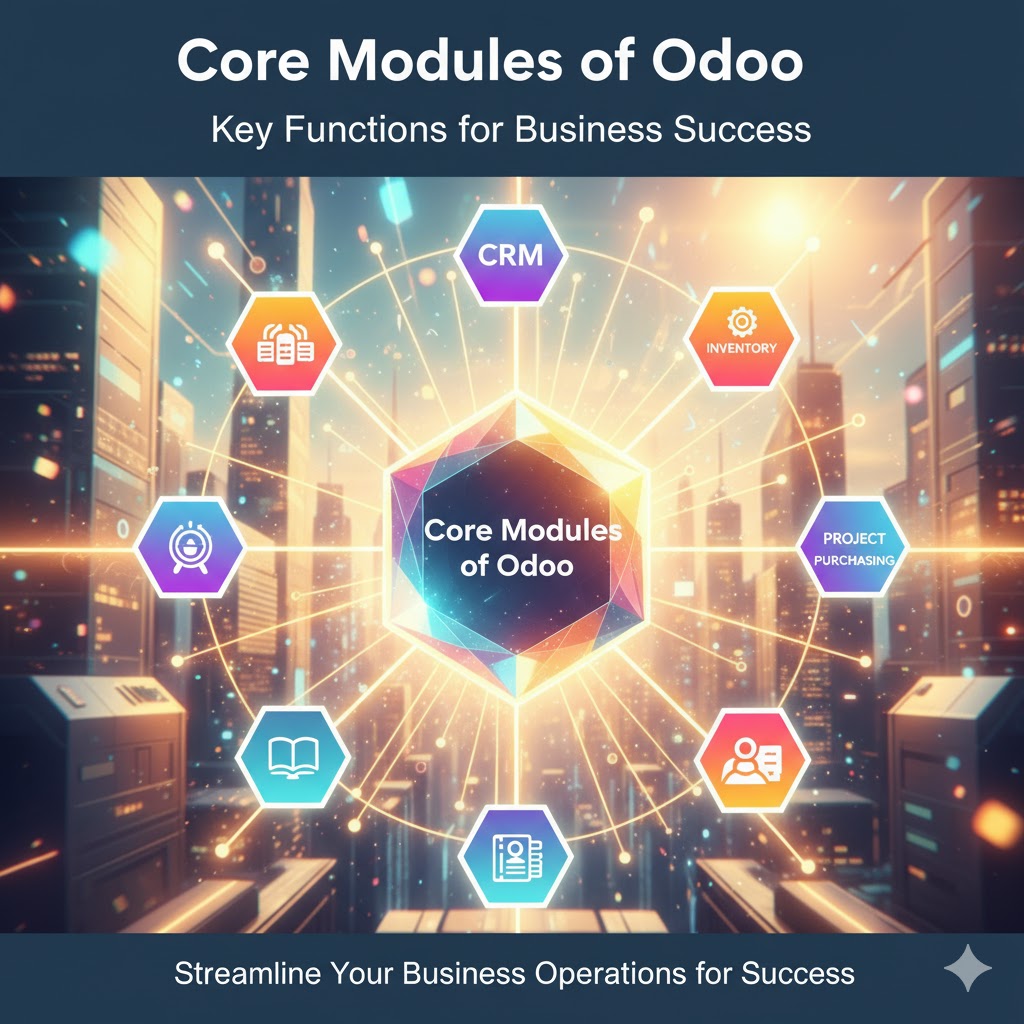
Core Modules of Odoo
| Module | Key Capabilities | Benefits |
| Accounting & Finance | Automated invoicing, reconciliations, financial reporting | Reduce errors, improve financial visibility |
| CRM & Sales | Lead management, quotations, sales automation | Increase sales efficiency and customer satisfaction |
| Inventory & Warehouse | Stock tracking, multi-warehouse, barcode & serial tracking | Optimize inventory and reduce stockouts |
| Manufacturing & MRP | BOM management, production scheduling, quality checks | Improve production efficiency and reduce waste |
| eCommerce & Website Builder | Online store, payment integration, inventory sync | Expand sales channels and improve customer experience |
| Project & HR Management | Payroll, attendance, project tasks, performance | Streamline HR and project operations |
Key Features of Odoo ERP
1. Accounting & Finance Automation
Odoo ERP offers robust accounting capabilities, including:
- – Automated invoicing and payment processing
- – Bank reconciliation and financial reporting
- – Multi-currency and tax management
- – Budget tracking and forecasting
Benefits: Businesses reduce manual errors, improve compliance, and access real-time financial insights.
2. CRM & Sales Management
Odoo CRM module allows businesses to:
- – Track leads, prospects, and customers
- – Automate sales workflows
- – Manage quotations, orders, and invoices
- – Integrate email marketing and follow-ups
Benefits: Increase sales efficiency, monitor performance, and improve customer satisfaction.
3. Inventory & Warehouse Management
Odoo ERP provides inventory and warehouse management features:
- – Real-time stock tracking.
- – Multi-warehouse management.
- – Barcode and serial number tracking.
- – Automated replenishment and stock alerts.
Benefits: Optimize inventory, reduce stockouts, and improve supply chain efficiency.
4. Manufacturing & MRP
- – Bill of Materials (BOM) management
- – Production planning and scheduling
- – Work order management
- Quality checks and reporting
Benefits: Improves production efficiency, reduces waste, and ensures timely delivery.
5. eCommerce & Website Builder
- – Build online stores with drag-and-drop interface
- – Integrate with inventory and sales modules
- – Payment gateway integration
- – Customer portal for tracking orders
Benefits: Expand online sales channels and enhance customer experience.
6. Project & HR Management
- – Employee records and payroll management
- – Task and project tracking
- – Attendance, leave, and timesheet management
- – Performance evaluation and reporting
Benefits: Ensures smooth HR operations and efficient project delivery.
Odoo vs ERP Alternatives
| Platform | Modularity | Customization | Implementation Cost | Deployment Options | Best Fit |
|---|---|---|---|---|---|
| Odoo ERP | Very High | Very High (Modules + APIs) | Medium | Cloud / On-Premise | SMEs, growing & process-driven businesses |
| ERPNext | High | High (Code-level) | Low to Medium | Cloud / On-Premise | Cost-sensitive SMBs |
| SAP Business One | Medium | Low–Medium (Partner-led) | High | Cloud / On-Premise | Mid-size enterprises |
| Microsoft Dynamics 365 | Medium | Medium (Configuration-based) | High | Cloud Only | Microsoft-centric organizations |
| NetSuite ERP | Medium | Medium | Very High | Cloud Only | Large, global enterprises |
Not sure which ERP fits your business?
Get Free ERP Selection & Implementation PlanStrengths & Weaknesses of Odoo ERP
| Aspect | Strengths | Weaknesses |
| User Interface | Intuitive, easy-to-use dashboard | None significant for small users |
| Community & Marketplace | Large global community, 50+ apps | Some advanced modules are paid |
| Deployment | Cloud and on-premise options | Large deployments may need high server resources |
| Scalability | Suitable for SMEs and large businesses | Resource-intensive for enterprise-level installations |
Ideal Use Cases for Odoo ERP:
| Business Type | Recommended Use | Benefits |
| SMEs | Modular ERP business software | Start small and scale as business grows |
| eCommerce | Integrate online sales with inventory and CRM | Unified platform for sales management |
| Manufacturing | Efficient production planning and supply chain management | Reduce waste and improve efficiency |
| Service Companies | Manage projects, HR, and finances | Streamline operations and improve productivity |
Odoo Pricing and Licensing
It offers flexible pricing models:
| Plan | Features | Pricing (2026) |
| Odoo Community | Basic modules, free open-source ERP | Free |
| Odoo Enterprise | Advanced modules, cloud hosting, support | Starting from $24/user/month |
| Add-ons | Paid modules for specialized functions | Varies by module |
| Implementation & Consulting | Professional setup and customization | Based on project scope |
Odoo Implementation and Consulting Services
Professional Odoo consulting services can help with:
- – Custom module setup and workflow automation
- – Data migration and system integration
- – Employee training and adoption
- – Long-term Odoo ERP maintenance and support
Benefits: Tailored Odoo implementation ensures businesses get a system optimized for their processes.
Odoo Review and News (2026 Updates)
Pros:
- Comprehensive modules covering all business functions
- Open-source and highly customizable
- Active global community and marketplace
- Flexible deployment options
Cons:
- Some advanced features require additional cost
- Large deployments need higher technical resources
Latest News:
- Improved UI and faster performance in Odoo 16/17
- AI-powered analytics and workflow automation
- Growing developer community adding new apps and integrations
Conclusion:
Odoo ERP is a powerful and modular business software that is particularly suitable for SMEs, eCommerce, manufacturing, and service companies. Moreover, its flexible architecture, comprehensive modules, and strong community support together make it a top choice in 2026.
Businesses can integrate accounting, CRM, inventory, manufacturing, HR, and project management into one unified system, improving efficiency and enabling growth. Whether exploring Odoo implementation, hiring an Odoo development company, or testing an Odoo demo, Odoo provides the tools necessary for scalable and efficient operations.
Ready to Transform Your Business with Odoo ERP?
Contact our ERP experts for a tailored implementation roadmap, module selection, and integration plan.
Schedule Free ERP Strategy Call