
As digital transformation accelerates worldwide, businesses in the UK, USA, and Europe are shifting toward a powerful combination: AI + open source custom development. In 2026, this blend is delivering faster innovation, improved automation, and — most importantly — up to 40% cost reduction compared to traditional proprietary solutions.
– Open source removes licensing fees.
– AI removes repetitive work.
– Together, they deliver scalable, affordable, future-proof software for growing businesses.
Against the backdrop of emerging technology trends, this blog explores why the AI + open-source model is booming and how companies can leverage it for their next software project.
Why AI + Open Source Is the Future of Software Development
1. Lower Development Costs
Consequently, businesses no longer want expensive proprietary platforms. Open-source frameworks like Laravel, Django, Node.js, Odoo, SuiteCRM, Dolibarr, and EspoCRM eliminate high annual license fees. Additionally, AI tools such as Copilot, CodeWhisperer, Codeium, and LLM-based coding assistants are helping teams cut manual coding time by up to 30–50%.
Result:
– Faster delivery
– Lower cost
– High-quality code
– Reduced reliance on big vendors
2. Faster Time-to-Market
In 2026, speed is everything. AI-powered development improves:
- – Code generation
- – Bug detection
- – Documentation writing
- – API testing
- – UI/UX prototyping
Open-source frameworks offer ready-made modules so developers don’t build from scratch.Businesses can launch custom CRMs, ERPs, portals, or apps in weeks instead of months.
3. Complete Ownership & No Vendor Lock-in
Proprietary systems trap businesses with:
- – Locked data
- – Forced upgrades
- – High monthly fees
Open source gives full ownership of:
- – Code
- – Data
- – Custom features
- – Hosting environment
As a result, AI helps teams manage the system more efficiently through automation, smart troubleshooting, and intelligent system monitoring.
4. Enterprise-Level Security with AI Monitoring
Many companies believe open source is “less secure,” but in 2026, the opposite is true.
AI-driven vulnerability scanners + open-source community patches = Stronger security than most SaaS apps
AI tools monitor:
- – Unusual login activity
- – Weak endpoints
- – Outdated dependencies
- – API misuse
- – Server attacks
This reduces security risks by 30–60%.
5. Hyper-Customization with Open-Source Flexibility
Open-source platforms allow unlimited customization:
- – CRM workflows
- – ERP modules
- – Business dashboards
- – Automation rules
- – API integrations
- – Custom product features
AI enhances this by enabling smarter:
- – Workflow automation
- – Predictive analytics
- – Sales forecasting
- – Customer support chatbots
- – Inventory prediction
- – Document processing
In 2026, businesses prefer custom-built solutions instead of generic SaaS platforms.
6. Perfect for Global Businesses (UK + USA + EU)
Global brands are now adopting open-source AI solutions because:
UK businesses focus on:
- – Reducing software dependency
- – GDPR + data sovereignty
- – Budget-friendly digital transformation
USA businesses focus on:
- – Startup scalability
- – AI-powered automation
- – Custom SaaS product development
EU businesses focus on:
- – Open-source sustainability
- – High-level security standards
- – Compliance and transparency
AI + open source perfectly fits these requirements.
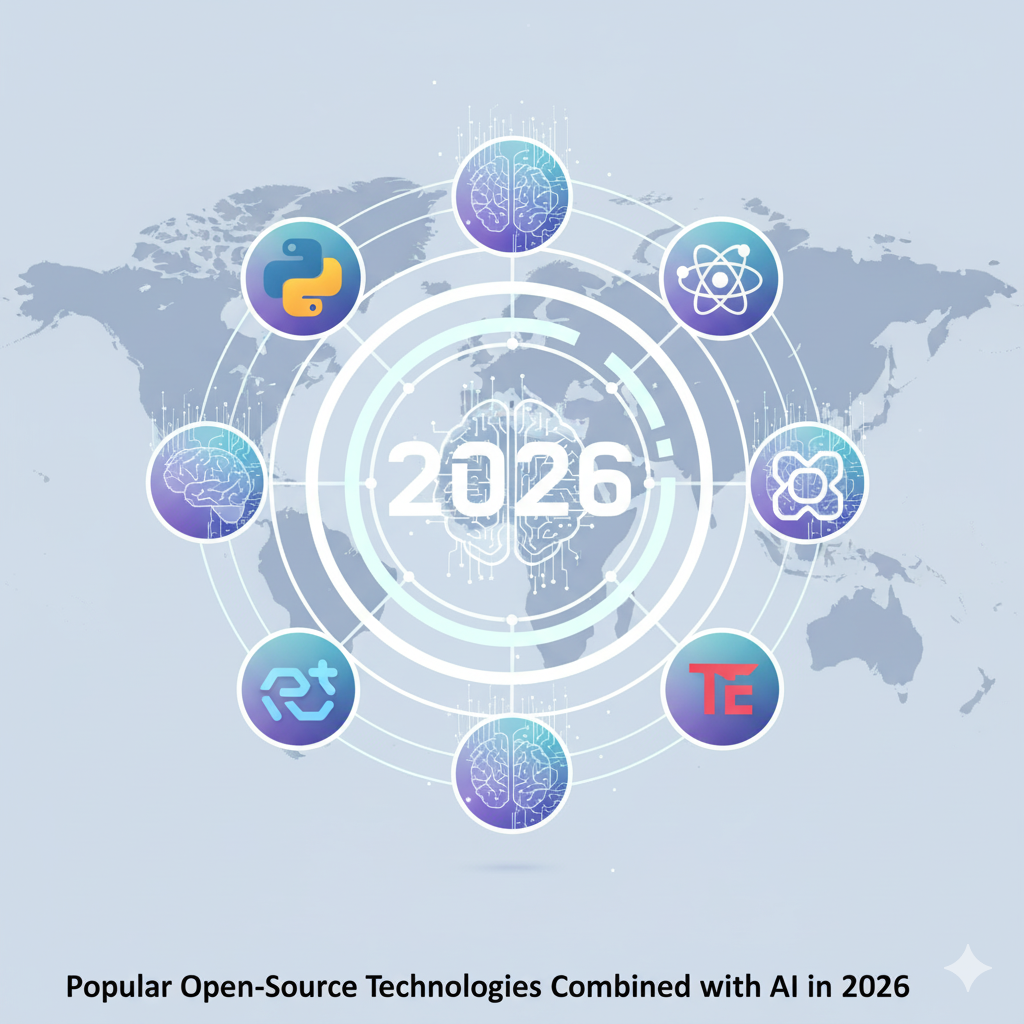
Popular Open-Source Technologies Combined with AI in 2026
CRM Platforms
- – SuiteCRM
- – Dolibarr
- – Odoo
- – EspoCRM
Web Development Frameworks
- – Laravel
- – Django
- – Node.js
- – FastAPI
AI Tools
- – Copilot
- – ChatGPT API
- – LangChain
- – Hugging Face Models
- – DeepSeek Code Models
DevOps & Cloud Tools
- – Docker
- – Kubernetes
- – GitHub Actions
- – OpenTelemetry
- – Grafana
As a result, together, they create smart, scalable, cost-effective digital systems.
Real Cost Breakdown: AI + Open Source vs Proprietary Software (2026)
| Feature | AI + Open Source | Proprietary SaaS |
| Licensing Cost | $0 | $50k+/year |
| Scalability | Unlimited | Pay per user |
| Flexibility | High | Low |
| AI Integration | Native/custom | Limited |
| Security | Community + AI monitoring | Vendor-dependent |
| Long-Term Savings | 30–40% | Minimal |
AI + Open Source delivers long-term ROI, especially for growing companies.
Who Should Adopt AI + Open Source in 2026?
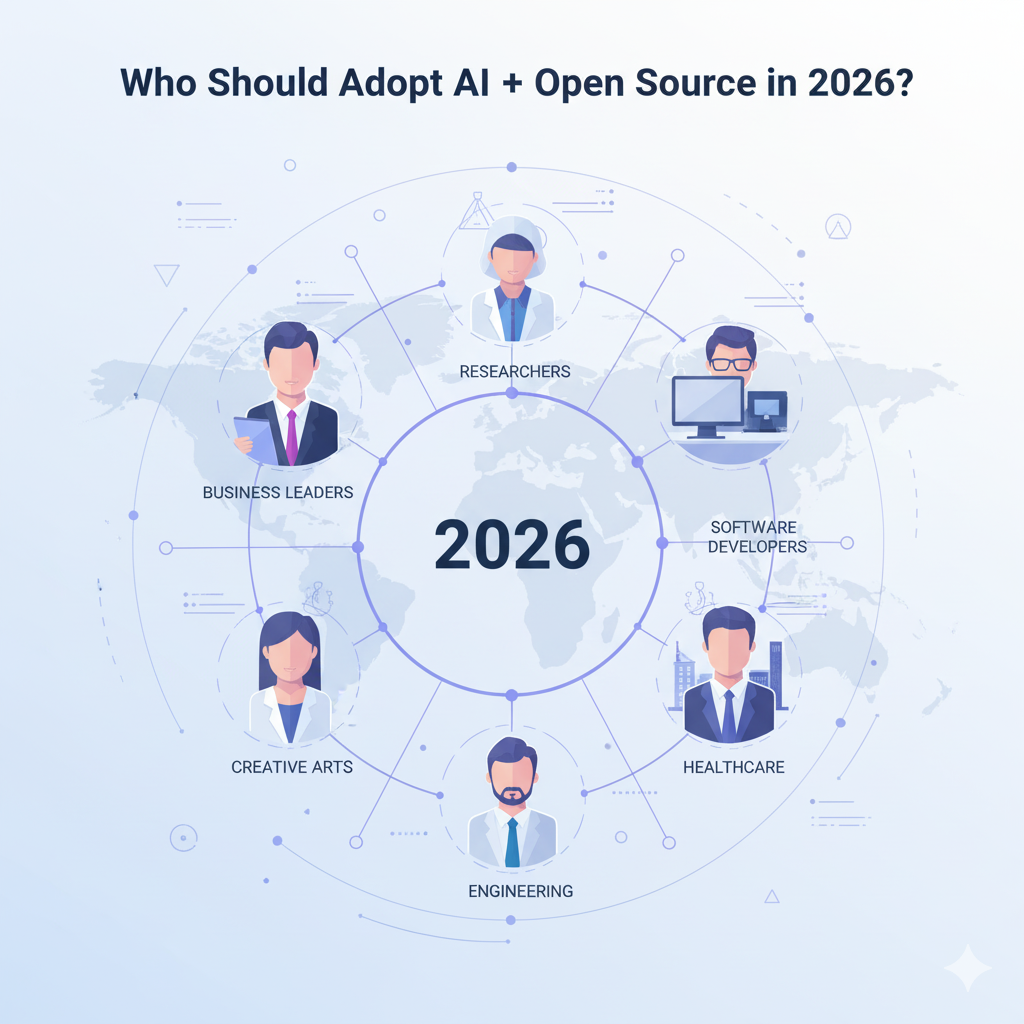
This model is perfect for:
– SMEs
– Startups
– SaaS founders
– Enterprise teams
– Agencies
– Digital product companies
Best use cases:
- – AI-powered CRMs
- – Custom ERPs
- – Customer portals
- – E-commerce backends
- – Reporting dashboards
- – Workflow automation
- – Industry-specific SaaS apps
AI + Open Source: Predictions for 2027 & Beyond
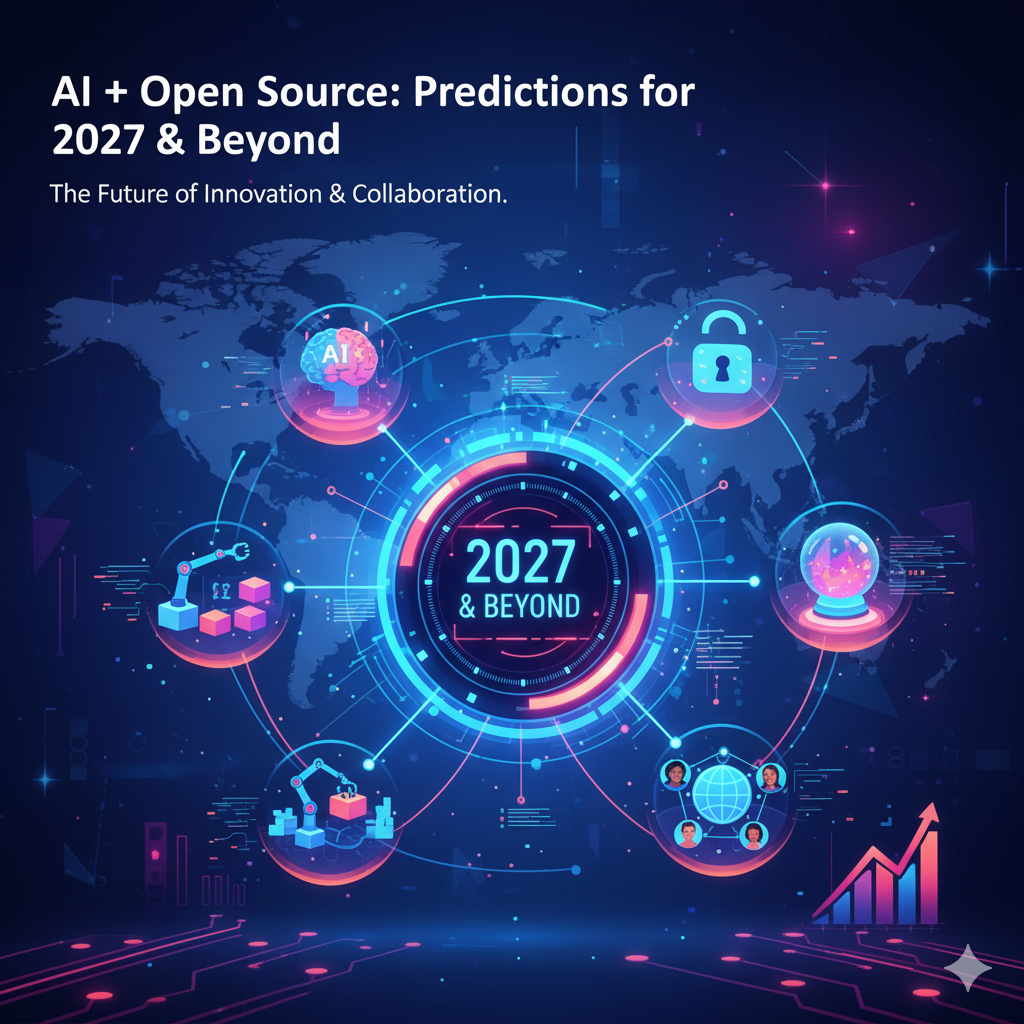
Businesses will shift to:
- – 80% open-source stacks
- – AI-driven development
- – Custom cloud-native systems
- – Lower-cost vendor-free digital ecosystems
Expect:
– Massive growth in AI-assisted software engineering
– More companies adopting OSPO (Open Source Program Offices)
– Higher preference for custom solutions over SaaS
Conclusion
AI + open source is not a trend — it’s becoming the global standard for cost-effective software development.
In 2026 and beyond, companies that adopt this model gain:
-
- Faster development
- Lower costs
- More automation
- Full ownership
- Better security
- Long-term scalability
If your business is planning a CRM, ERP, portal, or custom software, AI + open source is the smartest choice.

![Why Are People Leaving SuiteCRM? [Insights & Alternatives]](https://devdiligent.com/blog/wp-content/uploads/2025/10/Untitled-design-10.png "Why Are People Leaving SuiteCRM? [2025 Insights & Alternatives]")